
A Broken Foot, a New Exosym, and 100 Miles Later
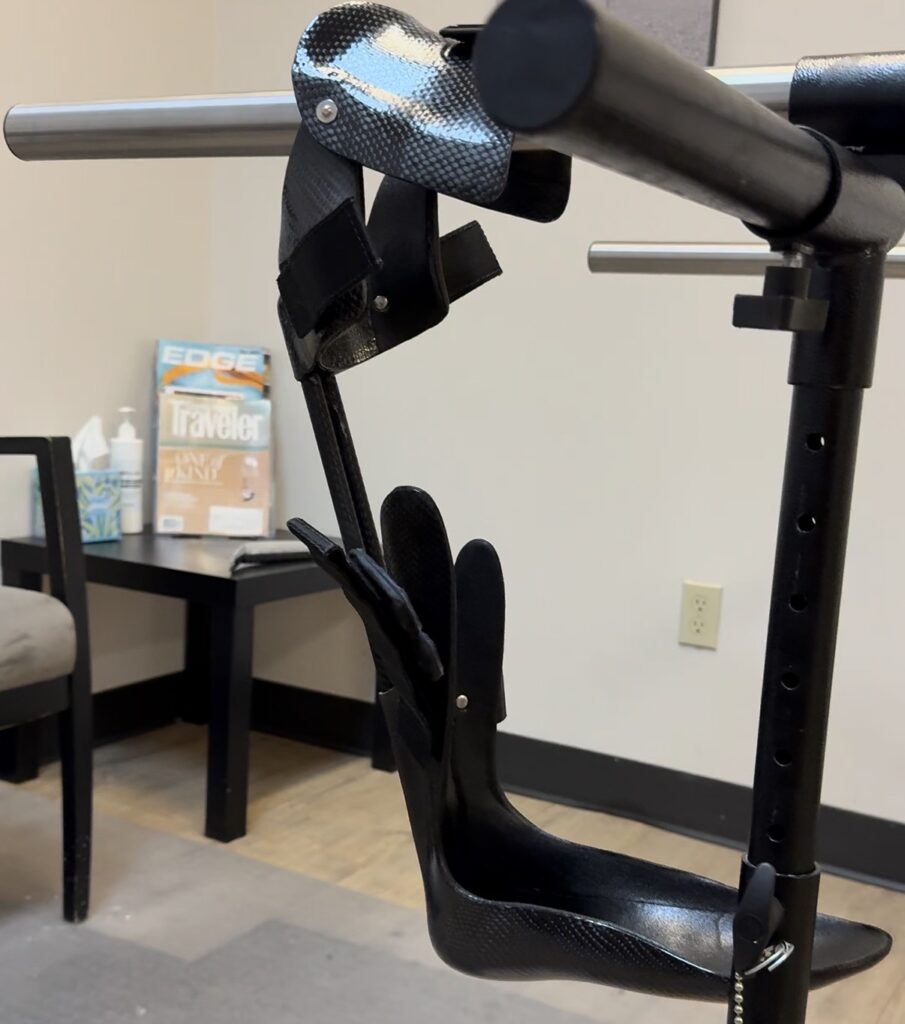
While training for and completing my first 50 mile ultramarathon in early 2025, I developed a small fracture in my right foot. The Exosym provided just enough protection to get me across the finish line, but the pain made one thing clear, if I wanted to go farther, something had to change in my Exosym.
The most common reason someone needs a new Exosym, prosthesis, or orthosis is because the limb has changed. In my case, the injury created new sensitivities and increased the need for offloading. Going further exposed some weaknesses in my Exosym. The solution was a more plantar aligned Exosym, allowing the device to engage sooner and transfer load away from the damaged portion of my foot earlier in the gait cycle.
In simple terms, if I wanted to keep chasing longer distances, I needed a new Exosym.
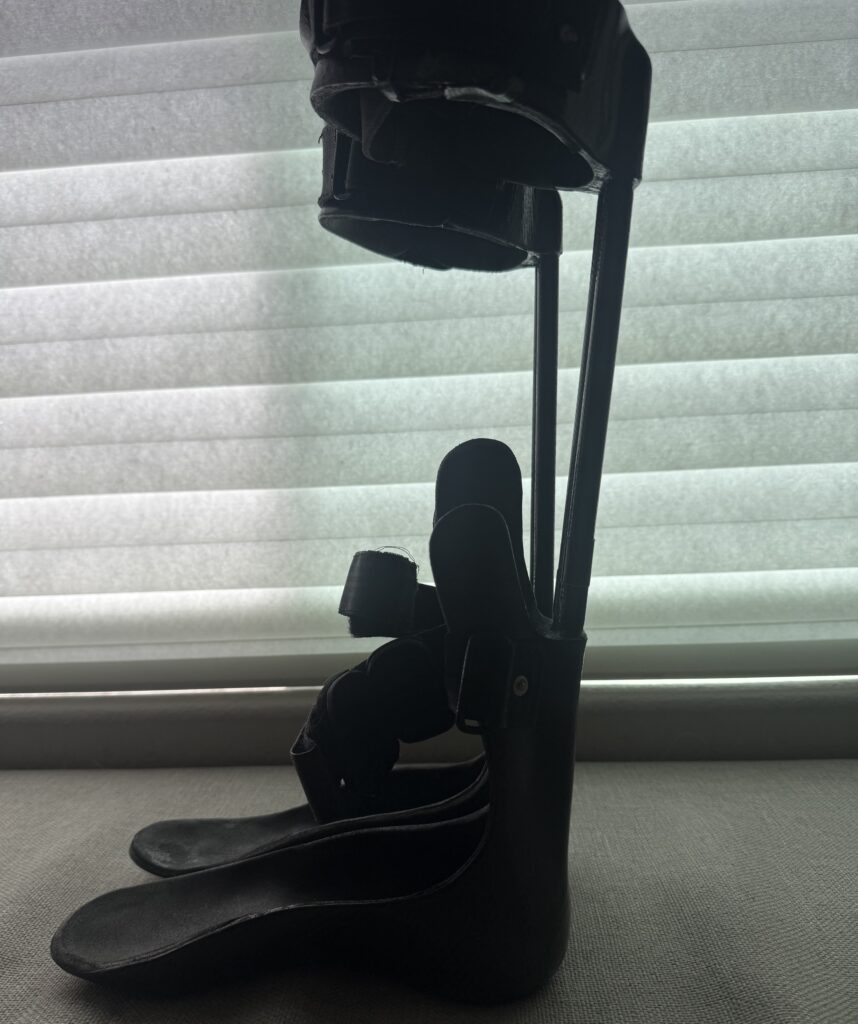
New Exosym is in front.
This photo shows my original and current right side Exosyms. The two bars, called the Clever Bone Rod, are normally positioned nearly straight up and down. When the Exosym is set in a more plantar position, the rod leans farther backward. My current Exosym is about 20 degrees more plantar than the original. A heel insert is used inside the shoe to maintain the correct alignment.
At this point, some people are probably wondering how I can even fit into a more plantar positioned Exosym when I essentially range of motion in my feet and ankles.
Candidly, I do not fully understand it myself. Ryan somehow makes it work through adjustments to the footplate padding and overall fit. I am but a gritty runner, not a prosthetist or engineer, so I will leave the technical explanation to the experts.
What I do know is that every gain comes with a cost.
A more plantar positioned Exosym offloads my limb sooner, which is exactly what I needed but the cost is notable. The tradeoff is that the device becomes a bit more challenging to move in.
Standing feels less stable. Walking is less smooth and requires more effort. Running at slower speeds or on uneven terrain becomes a little more challenging. Steep climbs are especially brutal because the device is constantly trying to keep me on my toes. As I fight to move uphill, the cuff places tremendous pressure on my shin while demanding significantly more energy with every step.
In short, the more plantar position improves protection for my limb, but it demands more from the rest of my body.
A more plantar position of the Exosym footplate provides several advantages. As the strut engages sooner in the gait cycle, load is transferred away from the limb earlier. This reduces stress on compromised joints, bones, and soft tissues. Also, earlier offloading means less pain, less fatigue, and the ability to pursue longer distances than would otherwise be possible.
I flew to the Exosym clinic where I was casted, fitted, and adjusted into a new device. The fracture related issues were resolved, but running immediately became more challenging. To accommodate the new alignment, I now use a larger heel insert, typically alternating between a ½ inch and ¾ inch insert, though most often the ½ inch.

Exosym heel insert.
Back home, the hard work began. I spent months training and falling a whole shit ton and each time I hit the pavement hurt. After sending the Exosym back for an adjustment, I learned that I still needed to lift my limb slightly higher with every stride. A centimeter or two does not sound like much, but after 26.2 miles and beyond, that extra effort becomes significant. I’m not complaining, I am just stating what needed work.
The adaptation paid off. Since receiving this new Exosym, I completed both a 100K and a 100 miler. Honestly, someone overcoming adversity to complete 100 meters is cool enough to me. I celebrate it all because every person's challenges are different, and your mile may be much harder than my mile.
For me, reaching these ultra distances brings tremendous happiness, but none of these achievements happen alone. They are the result of a village of people. Today, we recognize the innovation that makes devices like the Exosym possible. I carry a deep sense of gratitude and excitement as I continue chasing the next starting line.
Published on June 4, 2026