
Exosym vs. PDE: One Device Got Me 6 Miles, the Other Got Me 100

Which is better for running, an Exosym or a PDE based device like the Fabtech? One got me 6 miles. The other got me 100.
Disclaimer: I am not a certified prosthetist orthotist, engineer, or physician. This article is simply my perspective as a para ultrarunner as of June 7, 2026.
Why My Perspective May Be Unique
As far as I know, I am the only person in the world who has spent an extended period of time running with an Exosym on one leg and a Fabtech PDE, built by the recommended Fabtech clinic, on the other. While this is still a sample size of one, it provided a unique opportunity to compare the two devices under the same body, training load, terrain, and running goals.
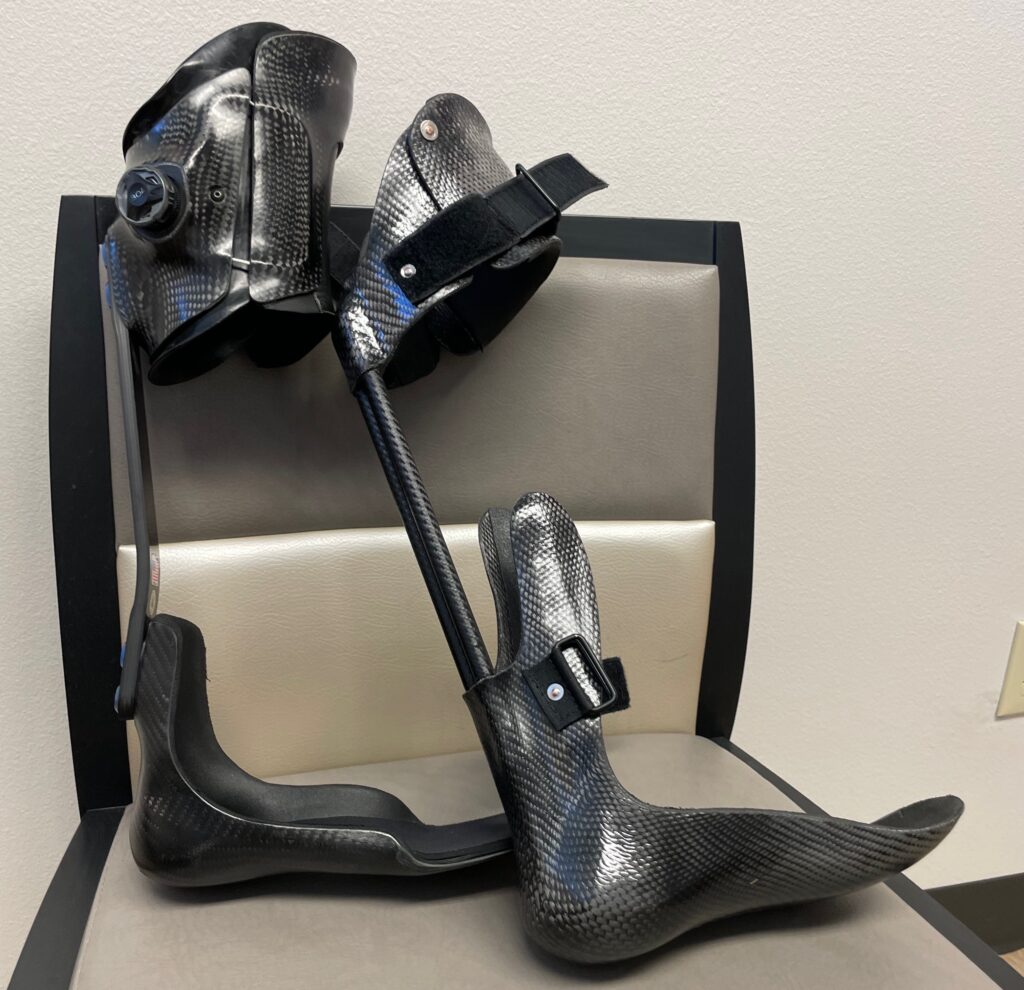
Fabtech on Left, Exosym on Right
I was born with severe birth defects from face to feet, most notably very severe bilateral clubfoot. Other issues include tibial torsion, lower limb muscle atrophy, bilateral patella alta, contracture issues, and the many significant problems due to highly archaic lower limb reconstruction. In short, absolutely zero joints, bones, or soft tissues are normal. Some are missing, and some are so deformed and damaged that doctors are bewildered. My childhood surgical records are on my website. For brevity, I cannot stand or walk barefoot.
Also, I want to state that I am grateful for the Fabtech PDE innovation. The PDE team is kind and provides a great service to the disabled population. Limb salvage is rapidly growing and this is outpacing the limb loss community, yet we have fewer innovations and solutions. Much of the O&P industry and our advocacy orgs are hyper focused on limb loss and that’s okay, but this is not practical because the bigger population of patients are getting ignored.
With that background established, here is my experience running in both systems.
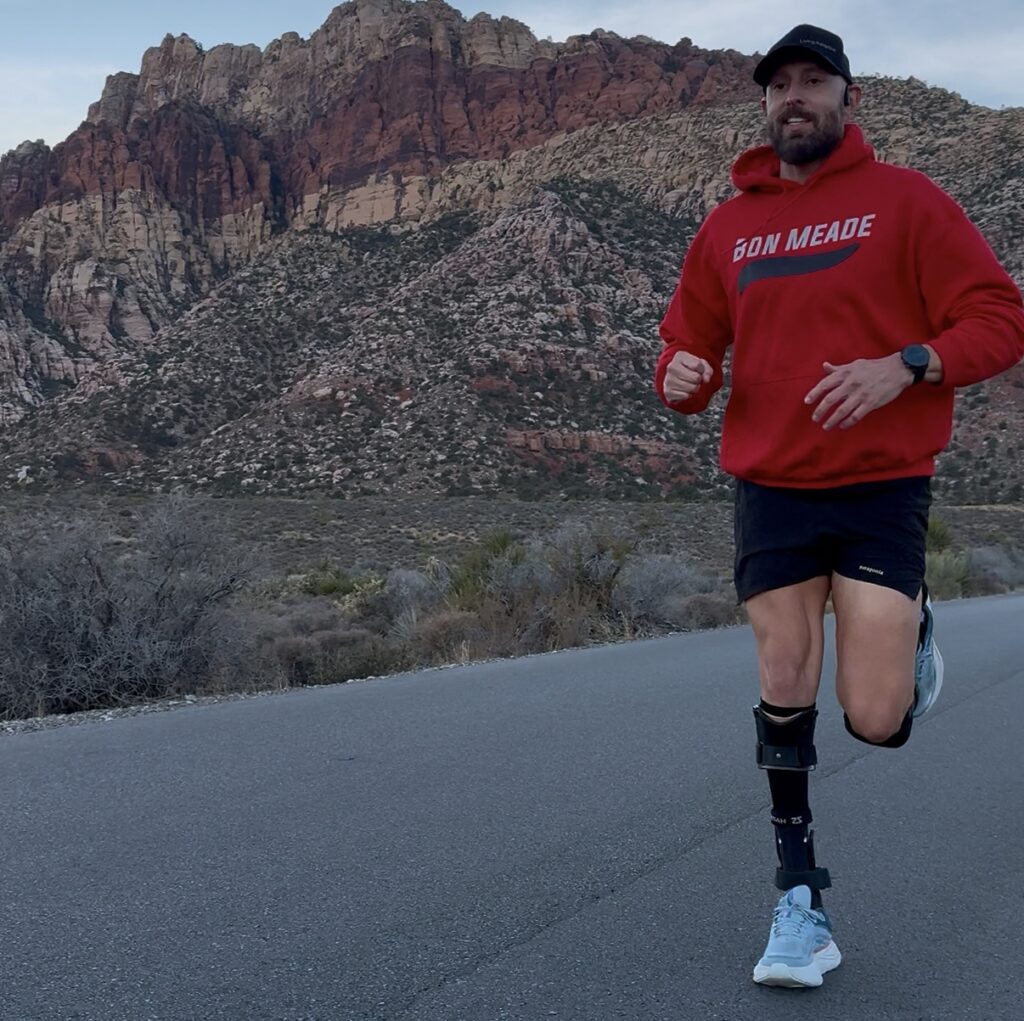
Scott Davidson wearing Exosyms and running in Red Rock Canyon
I will keep my answer short. Remember, this is just my perspective.
- Ease of Running: The PDE based device is easier to run in initially, but the consequences are significant in terms of limb damage. The more offloading power, the more energy needed to run. Prior to the Exosym, I was running in PDE devices. I experienced another massive failure and began looking at wheelchair endurance sports. The Exosym restored my ability to run.
The Exosym takes more energy to move because the offloading power is significantly greater, but that tradeoff was worth it. - Energy Return: Once I developed the muscles required and dialed in my technique, running in the Exosym became easier. The Exosym provides a small amount of energy return similar to a walking prosthetic, but nothing like a running prosthesis. The PDE gave me nothing noticeable in comparison.
The trick is learning how to use the Exosym. Once you do, you can begin to capitalize on the energy it gives back and offset some of the energy needed to overcome the offloading power. - Endurance and Protection: The category is not even close. The PDE was a failure, for me, for long distance running. No matter the build, my limbs got damaged and runs needed to stop. The Exosym has protected my lower limbs through a 100 mile ultramarathon. Let that sink in for a minute. One device could not get me through six miles without some damage. The other got me through 100 miles.
So if two limb salvage runners are moving at the same pace, which device is transferring more load away from the biological limb? My answer is obvious. The Exosym. Even if it requires more energy to run in, it preserves tissue and makes long term participation in sport possible. It takes less energy to run without a device than with one, but if your limb gets destroyed in the process, what exactly did you gain? - Comfort: No comfort, no long runs. It is that simple. I can keep my Exosym on throughout an ultramarathon. I could not keep my PDE on after a long walk. The Exosym cuff is patellar loading, doesn’t shift, and allows for comfortable knee movement. Also, the footplate is contoured to my foot, padded out correctly, and accommodates sensitive tissues. Over 50 miles, 100 miles, or more, those details become everything.
Final Thoughts
At Disneyland, I met someone wearing what looked like an Exosym style device with a PDE strut instead of the traditional Exosym strut. That person was using a wheelchair. After talking with them, my immediate thought was that this looked like the kind of mobility challenge Ryan Blanck has often been able to solve with the Exosym.
I share this because it raises an important question. If a device copies the Exosym concept but replaces the strut with a PDE, is it still capable of producing the same outcome? From what I have seen and experienced, I do not think so.
Too often in the O&P world, failure gets blamed on the prosthetist, the patient, or the severity of the disability. Sometimes that may be true. But sometimes the answer may be much simpler: the components and design are not doing enough.
That is where more research is needed. We need to better understand why one device restores mobility for some limb salvage patients while another device falls short.
Each person’s disability is unique. If your challenges are minimal, a PDE may be enough to restore activity. I know people with isolated joint injuries who hike or run successfully in PDE based devices. If you are in limb salvage and do not plan to be a highly active runner, climber, hiker, or endurance athlete, a PDE may work well for you.
For the rest of us, the Exosym is still the answer.
Published on June 7, 2026